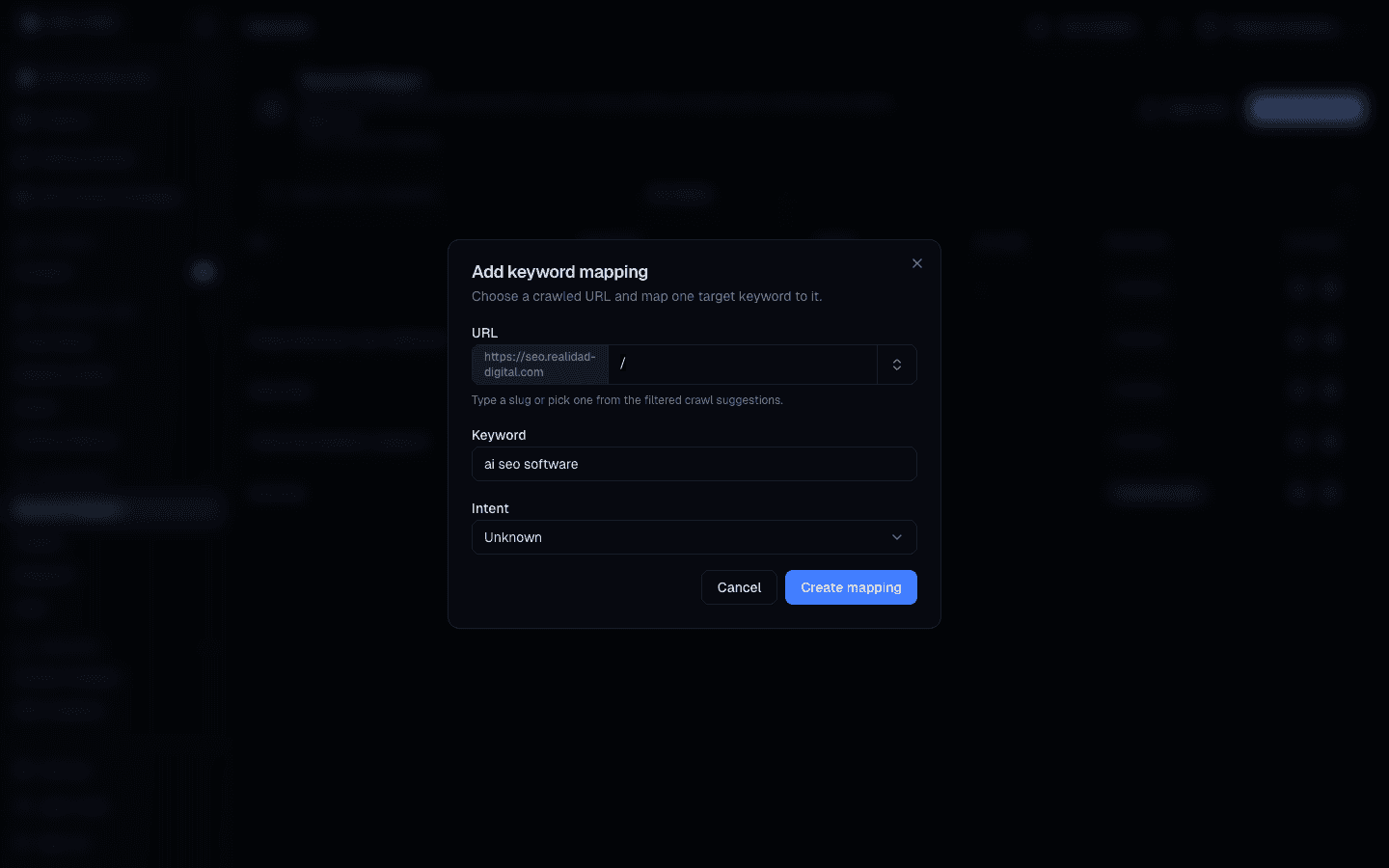
Group overlapping targets
See when multiple URLs are chasing the same intent, query set, or content opportunity.
Cannibalization Analysis Feature
Cannibalization Analysis that Protects Your Most Important Pages
Find overlapping URLs, compare page roles, and resolve keyword conflicts before similar pages compete against each other in search.
Detect keyword overlap and clarify which page should own each intent.
Find keyword and URL overlap early so your best pages support each other instead of competing.
See when multiple URLs are chasing the same intent, query set, or content opportunity.
Review mapped keywords, performance signals, and content focus to decide which URL should lead.
Clarify consolidation, internal linking, content edits, or noindex decisions with a cleaner action path.
Keep new content and optimization work aligned as your keyword footprint expands.
Cannibalization Analysis
Built to help teams move with confidence while strengthening growth consistency.
Cannibalization Analysis creates more value when your team can scale collaboration, execution pace, and visibility together. Compare plans to pick the setup that fits your next growth stage.
Compare PlansIdentify URLs competing for the same keyword intent before rankings and traffic dilute further.
Compare mapped keywords, performance context, and page roles to decide which URL should lead.
Turn conflicts into consolidation, refresh, internal linking, or targeting decisions.
Keep teams from improving pages that should be supporting another canonical target.
Explain why two pages should merge, split, or target different intents using a shared view.
Prevent new cannibalization as keyword maps and content plans expand.
How This Feature Benefits Your SEO Workflow
Keyword overlap silently weakens SEO programs when multiple pages compete for the same intent without a clear primary URL.
Cannibalization Analysis helps teams identify competing pages, decide which URL should lead, and turn overlap into a cleaner internal linking, content, or consolidation plan.
Keep teams from improving pages that should be supporting another canonical target.
Explain why two pages should merge, split, or target different intents using a shared view.
Prevent new cannibalization as keyword maps and content plans expand.
Cannibalization Analysis
Every feature is part of one connected growth workflow. Explore each section to see how the full system works together.
Cannibalization Analysis creates more value when your team can scale collaboration, execution pace, and visibility together. Compare plans to pick the setup that fits your next growth stage.
Discover and prioritize search opportunities before execution starts.
Explore Keyword ResearchCombine GSC and SERP evidence to see where a domain can grow next.
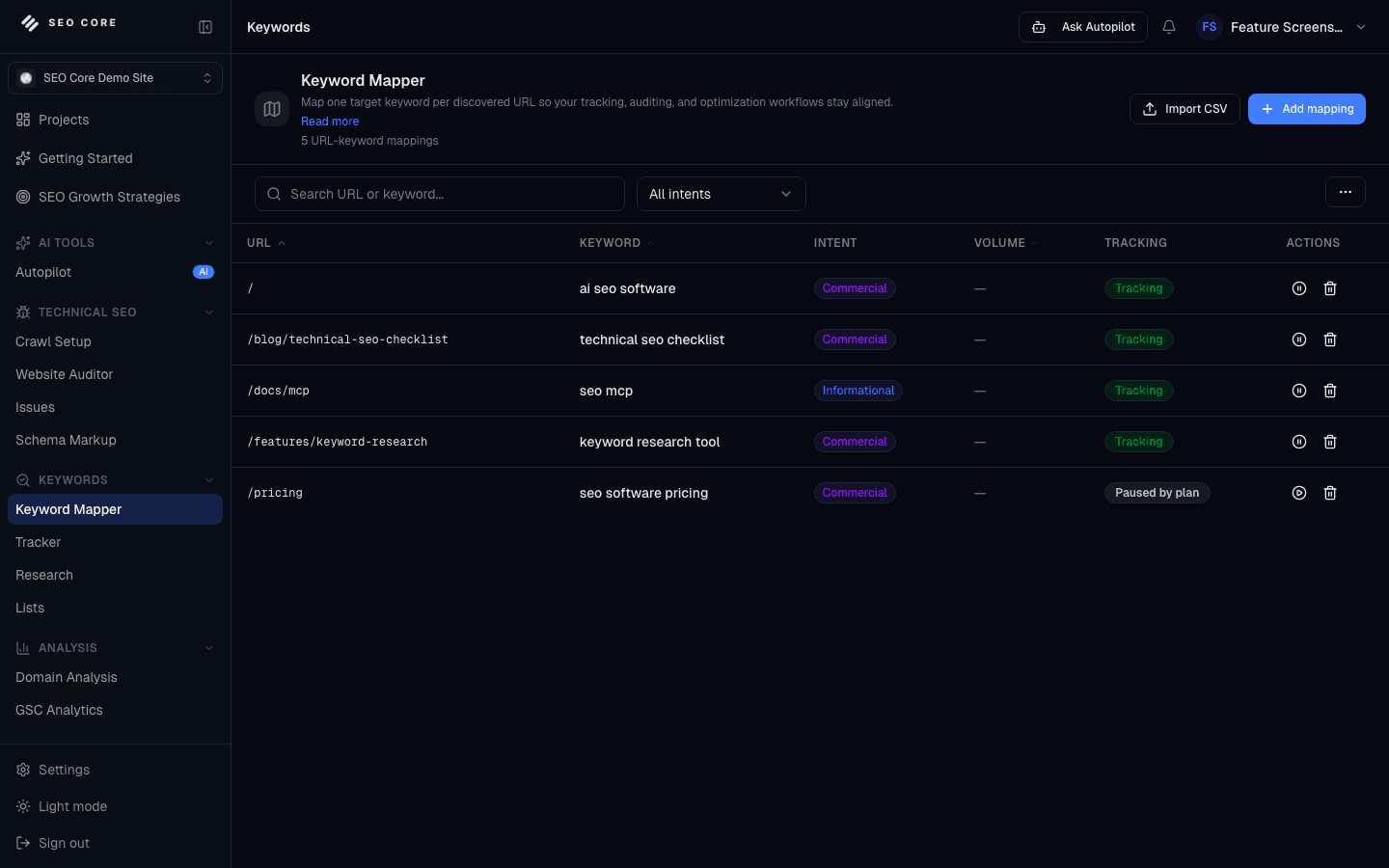
Explore Domain AnalysisConnect keywords to URLs with a cleaner on-page targeting plan.
Explore Keyword MapperFind overlapping URLs and protect important pages from competing with each other.
Explore Cannibalization AnalysisTrack movement and performance to keep priorities evidence-based.
Explore Keyword TrackerSurface technical blockers that can affect crawlability and indexation.
Explore Website AuditorCentralize SEO problems so teams can resolve high-impact items first.
Explore IssuesImprove structured data coverage to support richer search visibility.
Explore Schema MarkupImprove pages with focused content guidance, SERP context, and optimization drafts.
Explore Content EditorPackage technical and performance progress into stakeholder-ready SEO reports.
Explore Technical ReportsShip SEO changes with controlled rollouts and clear version history.
Explore DeploymentsAccelerate SEO production with guided AI support across workflows.
Explore AI IntegrationTurn crawl, keyword, and deployment context into guided next actions.
Explore AI SEO AutopilotConnect trusted agents to SEO Core data, tools, and guardrails.
Explore SEO Core MCPCannibalization Analysis
Keyword cannibalization happens when multiple pages compete for the same search intent, making it harder for search engines and teams to understand which URL should rank.
SEO Core compares keyword mappings, URL roles, performance context, and overlapping intent signals to highlight pages that may be competing with each other.
Teams can consolidate pages, change targeting, improve internal links, refresh content, or clarify canonical direction depending on the conflict.
No. Smaller sites can also suffer from overlap, especially when content is created over time without a clear keyword map.
Cannibalization findings help refine the keyword map so each important page has a clearer role and fewer pages compete for the same opportunity.
Cannibalization Analysis
Use Cannibalization Analysis to strengthen your growth engine and help every team execute with clearer direction.